
After storm damage to your fence, the right first steps are to check for safety hazards, photograph everything before touching it, inspect posts and panels closely, and reach out to a fence professional if the damage looks widespread. We help homeowners across Sacramento, Roseville, Elk Grove, and Folsom recover quickly after severe weather, walking properties to assess damage and get fences back to full strength with minimal delay.
Start With Safety Before Anything Else
Before you walk up to a damaged fence, take a moment to look for hazards that aren’t always obvious right after a storm. Downed power lines near a fallen fence section are the most serious risk, so keep a safe distance and contact your utility provider immediately if you spot any wires touching the fence or ground nearby. Standing water around metal fencing, sharp splinters from broken wood panels, and unstable leaning sections that could shift further are all worth checking for as well. If pets or kids use the yard, block off the damaged area until you know it’s fully secure.
Document the Damage Before You Touch It
Once the area is safe, grab your phone and take photos before moving anything. This single step makes a real difference later, since insurance adjusters and fence contractors both rely on original condition photos to process claims and estimates accurately. Capture wide shots showing the full damaged section alongside close-ups of individual broken posts, cracked rails, or missing panels. It’s tempting to start clearing debris right away, but documenting first and cleaning up second protects you if you decide to file an insurance claim down the line.
Fence Damage Inspection After Storm
A thorough fence damage inspection after storm events should cover the entire perimeter, not just the section that looks obviously damaged from a distance. Walk the full length of your property line and check for these common issues.
Leaning Fence Posts: Storm Damage
Give each post a gentle push near the top. Leaning fence posts from storm damage usually point to a compromised footing below the soil line, even when the wood itself looks intact above ground. A single leaning post can often be reset, while several leaning in the same section suggests the ground shifted or water pooled around the base during the storm.
Broken Fence Panels Repair Needs
Broken fence panels repair is often the most visible type of damage, since high winds tend to snap boards clean off their rails or blow entire sections loose. Check both sides of each panel for cracks, splinters, or gaps where fasteners have pulled free.
Loose Hardware and Fasteners
Screws, nails, and brackets can work themselves loose during high winds even when the wood and posts hold up fine. Run your hand along rails and gate hinges to feel for movement that wasn’t there before the storm.
Fallen Fence After Storm: What to Check First
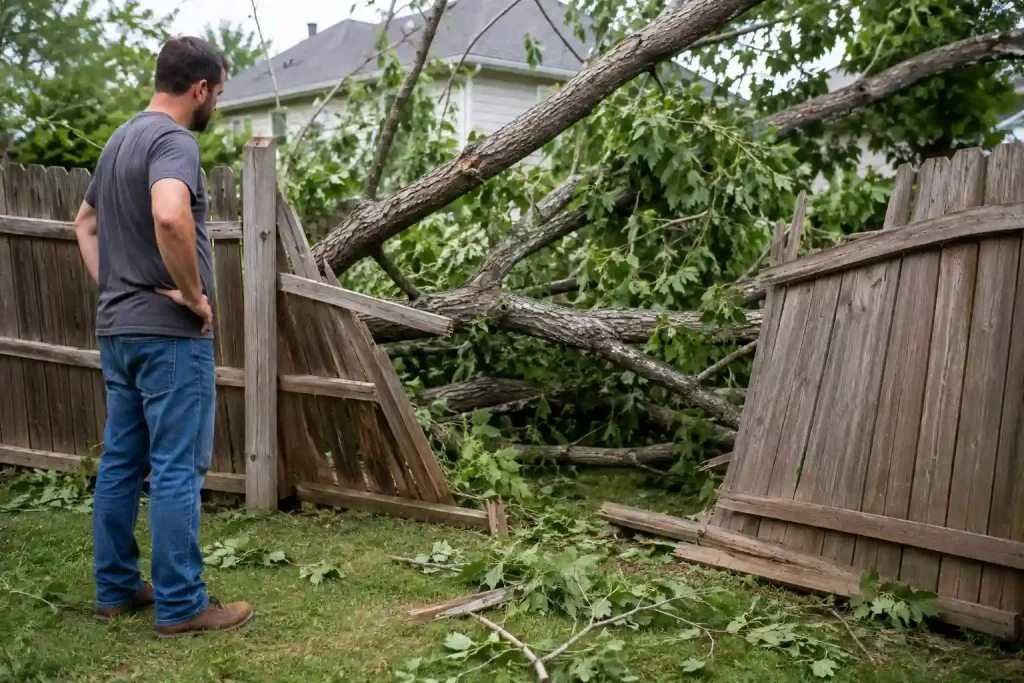
A fallen fence after storm damage looks alarming, but the extent of the actual problem is not always as bad as it appears. Sometimes only a handful of posts near the point of impact are truly compromised, while the rest of the fence run is salvageable once those sections are addressed. Look closely at where the fence gave way first, since that area often reveals whether the cause was a fallen tree limb, sustained wind pressure, or a weak point that was already developing before the storm hit.
Related Topic: Repair or Replace Fence?
Wind Damage Fence Repair Considerations
Wind damage fence repair needs vary quite a bit depending on the fence material involved. Wood fences tend to crack, splinter, or lose entire panels under sustained gusts, especially solid panel styles that act like a sail and catch more wind resistance. Vinyl fencing can crack or shatter in extreme cold combined with wind, while chain link fencing usually holds up well structurally but can end up stretched or pulled from its tension wire. Metal fencing sometimes bends at weak points near gate hinges or corner posts where wind pressure concentrates.
Temporary Fence Repair After Storm
While you wait for a full assessment or scheduled repair, temporary fence repair after storm damage helps protect your property in the meantime. Simple steps like propping up leaning sections with stakes, securing loose panels with extra screws, and using temporary fencing or barriers around pool areas or spots where pets and kids play keep everyone safe until permanent work begins. Clearing fallen branches and storm debris away from the damaged area also reduces the chance of additional stress on weakened sections before repairs start.
Does Homeowners Insurance Cover Storm Damage to Your Fence
Many homeowners wonder: Does homeowners insurance cover fence damage after a storm? The answer typically depends on your specific policy and the cause of the damage. Most standard homeowners policies do cover storm-related fence damage from wind, hail, or falling trees, though coverage details, deductibles, and claim requirements vary between insurance providers. Reviewing your policy documents or calling your agent directly gives you the clearest picture of what’s covered for your situation.
Fence Storm Damage Insurance Claim Tips
If you decide to move forward with a fence storm damage insurance claim, a few habits make the process smoother. Report the damage to your insurance company promptly, since many policies have windows for reporting after severe weather events. Keep your photos organized by section of fence, save any receipts related to temporary repairs or debris removal, and request a written estimate from a fence contractor to support your claim. Having clear documentation from the start tends to speed up how quickly claims get approved.
Storm Damage Fence Repair vs Full Replacement
Not every storm-damaged fence needs a complete rebuild. Storm damage fence repair is often the right call when the issue is limited to a few posts, panels, or hardware pieces, and the surrounding fence line remains structurally sound. Full replacement becomes the more practical option when damage stretches across multiple sections, when posts throughout the fence line are compromised, or when the fence was already nearing the end of its expected lifespan before the storm hit. A professional assessment gives you a clear answer based on what’s actually happening below the surface, not just what’s visible from the yard.
Related Topic: Why Is My Fence Leaning?
When to Call a Fence Repair Professional
Knowing when to call a fence repair professional saves time and often prevents small problems from turning into bigger ones. Reach out to a professional when:
- Multiple posts are leaning, or the fence has partially collapsed
- You’re unsure whether the damage is isolated or widespread
- You need documentation and an estimate for an insurance claim
- Downed power lines or standing water are involved near the fence
- The fence borders a pool, and safety is a concern until repairs are finished
A trained eye catches hidden issues that aren’t obvious from a quick walkthrough, including soft wood below the surface, shifted footings, and moisture damage that will only show up weeks later if left unaddressed.
Preventing Future Storm Damage
Once your fence is repaired or replaced, a few habits help it hold up better through future storms. Regular inspections catch small issues like loose hardware or early rot before they become bigger problems. Sealing or staining wood fences on schedule keeps the material stronger against moisture swings, and trimming trees or large branches near the fence line reduces the risk of impact damage during high winds.
Frequently Asked Questions
What should I do first after storm damage to my fence?
Check for safety hazards like downed power lines, then photograph the damage before touching anything, and inspect posts and panels for stability.
Does homeowners insurance typically cover fence damage from a storm?
Most standard policies cover storm-related fence damage from wind or falling trees, though coverage varies, so checking your specific policy is the best first step.
How do I know if my fence needs repair or full replacement after a storm?
Isolated damage to a few posts or panels usually means repair, while widespread leaning, multiple broken sections, or an aging fence often points toward replacement.
Can I temporarily fix my fence myself after a storm?
Yes, simple steps like propping leaning sections, securing loose panels, and using temporary barriers around pools or play areas help protect your property until permanent repairs happen.
When should I call a professional instead of handling storm damage myself?
Call a professional when multiple posts are affected, when you need documentation for an insurance claim, or when you’re unsure about the full extent of the damage.
Getting Your Fence Back to Full Strength
Storm damage to your fence can feel overwhelming in the moment, but a clear process makes recovery straightforward. Prioritize safety, document everything, inspect thoroughly, and bring in a professional when the damage extends beyond a quick fix. We at Fence Repair Company help homeowners across Sacramento, Roseville, Elk Grove, and Folsom assess storm damage and restore their fences quickly, so your property stays secure and looks its best no matter what the weather brings next. Contact us now for an appointment.